
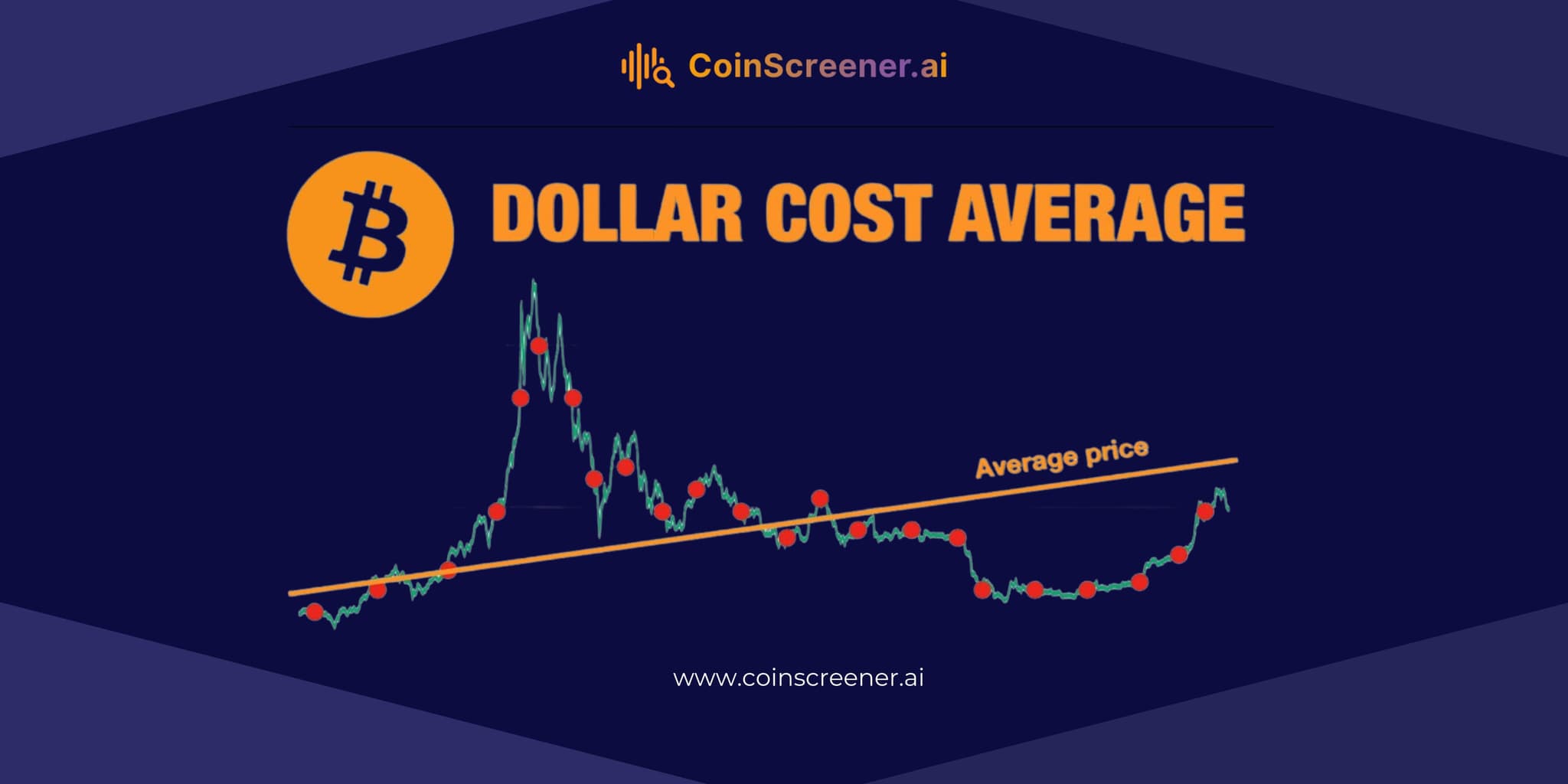
DCA (Dollar – Cost Averaging) is an investment strategy that is commonly applied in the stock market and of course, crypto is no exception. With the ability to minimize risks, shorten break-even time and increase profits. DCA is very popular with investors, especially beginner traders. CoinScreener will explain what exactly is DCA? and How to apply price averaging strategy in crypto? Let's find out In this article.
What Is Dollar-Cost Averaging (DCA)?
Dollar-cost averaging (DCA) is an investment method that reduces volatility when buying a large block of a financial product or instrument. It's also known as unit cost averaging, incremental averaging, or cost average effect.
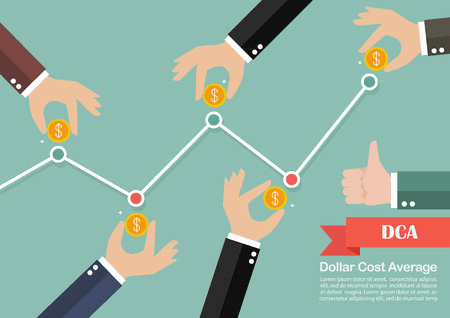
DCA divides the investment into smaller amounts that are invested individually at regular intervals until the money is depleted.
Financial markets have intrinsic volatility, meaning financial instruments can rise or fall. By lowering investment costs, so DCA will reduce volatility risk.
Price average formula:
Average price = Total capital/Total amount of coins purchased
Benefits of applying the DCA technique:
Helps traders maximize profits as well as avoid swinging tops.
Average investment costs and minimize risks in the buying and selling process, shortening the breakeven time.
Helps "beginner" investors who have not yet mastered analytical methods but can still make a profit from buying coins in periods of decline and selling at peaks.
Example:
Let's say, you plan to spend $12,000 to invest in a coin. But instead of “all in” 100%, you choose to apply the DCA coin strategy. At this time, your investment process will be conducted specifically as follows:
1st time: You buy 1 Bitcoin when it is at $7000.
2nd time: Bitcoin price drops to $3000/coin and you decide to buy 1 more coin.
3rd time: Bitcoin price drops to $2000/coin and you decide to buy 1 more coin.
=> Average price of 1 Bitcoin = (70000 + 3000 + 2000)/3 = $4000 (breakeven point)
Benefits of Dollar-Cost Averaging
1. Risk reduction
Dollar-cost averaging lowers investment risk and protects capital from market crashes. Money preservation allows investment portfolio management flexibility.
DCA avoids lump-sum investing by buying a security when its price is falsely inflated due to market emotion, resulting in a lower-than-needed quantity. Investors' portfolios will fall if the market corrects or the bubble collapses.
Long downturns reduce portfolio value. DCA minimizes loss and maximizes returns. DCA provides short-term downside protection against a security price decline, reducing regret.
When the market rises, DCA can boost long-term portfolio return potential.
2. Lower cost
Buying market securities when prices are declining ensures that an investor earns higher returns. Using the DCA strategy ensures that you buy more securities than if you had purchased when prices were high.
3. Ride out market downturns
Using the DCA strategy by investing periodic smaller amounts in declining markets assists in riding out market downturns. The portfolio using DCA can keep a healthy balance and leave the upside potential to increase portfolio value in the long term.
4. Disciplined saving
The strategy of adding money regularly to an investment account allows disciplined saving, as the portfolio balance increases even when its present assets are depreciating. However, a prolonged market decline can be detrimental to the portfolio.
5. Prevents bad timing
Even professional investors struggle with market timing. Investing a big sum at the wrong moment might damage a portfolio. Investors can benefit from dollar-cost averaging because market movements are hard to foresee.
6. Manage emotional investing
Behavioral theory predicts emotional investing due to factors including making a large lump-sum investment and loss aversion. DCA eliminates emotional investing.
DCA's disciplined buying method helps investors focus and avoid media hype about the stock market's short-term performance and direction.
**Related: **What is Unusual Volume? Why we should be aware of Unusual Volume?
Disadvantages of Dollar-Cost Averaging
Sufficient evidence exists that DCA can reduce the average dollar cost if applied with discipline and when favorable market conditions exist. However, other studies dispute the advantages, as well as the feasibility of conducting the DCA investment strategy successfully.
1. Expensive for transaction activities
Investors will incur higher costs when investing all in due to making many trades with small volumes to follow the price averaging strategy. Especially in the Crypto market, for every transaction that takes place on the blockchain, you have to pay transaction fees. The larger the number of transactions, the higher the cost.
2. Low profit
The higher the risk, the greater the return, and vice versa. Since it is a relatively safe strategy, the profit earned will not be as high as when you invest "all in". Even the account can be divided by 3 divided by 4 if the coin/token tends to decrease. If unfortunately you DCA into a junk coin with no potential or the market is in a Downtrend phase, you will face "empty hands", and heavy losses.
3. Missed out on some great investment opportunities
DCA only helps you get average results. It will not be the first choice for investors who want to take advantage of the change in coin prices to make huge profits in a short time.
4. Complicated
The task of monitoring each scheduled investment over a given time horizon by DCA is a complicated process, especially if, in the end, the difference compared to a lump-sum investment in terms of cost is negligible. The monitoring and tracking of each contribution incur time and energy, making it more complicated than a lump-sum investment.
How to apply price averaging strategy in crypto
Method 1: Weak price average: The number of new coins/tokens purchased is less than the old purchases => The average price decreases less than the old purchase price.
Example:
1st time: You buy 100 BTC worth 50,000 USD
2nd time: You buy 50 BTC worth 20,000 USD
Total you buy : 150 BTC
Average purchase price = (100 x 50,000 + 50 x 20,000 ): 150 = 40,000 USD
**Method 2: **Averaging the equilibrium price: The number of new coins/tokens purchased is equal to the number of old coins/tokens => Average price = (new price + old price): 2.
Example:
1st time: You buy 50 BTC worth 50,000 USD
2nd time: You buy 50 BTC worth 20,000 USD
Total you buy : 100 BTC
Average purchase price = (50,000 + 20,000 ): 2 = $35,000
**Method 3: **Strong price average: The number of new coins/tokens purchased is more than the old ones => the average price is much lower than the old purchase price.
Example:
1st time: You buy 50 BTC worth 50,000 USD
2nd time: You buy 100 BTC worth 20,000 USD
Total you buy : 150 BTC
Average purchase price = (50 x 50,000 + 100 x 20,000 ): 150 = 30,000 USD
Key message:
In order for the price averaging strategy not to fail, you need to keep a few things in mind:
- There are many junk coins on the market. These junk coins will often be "personalized" as the price, only goes up 1 time and then goes down forever. The more you buy, the more errors there are. Therefore, DCA should only apply to good coins. Because those new coins have a clear foundation, there is potential for future upside.
- Monitor price movements closely and have a clear strategy to buy more coins. Specifically, you must determine if you will buy at what price level and in what quantity. Only when the coin price drops to the level you set, you will buy, and if the coin price increases, you should not buy when applying the DCA strategy.
- Do not buy more gold when it has only dropped a few percent. By, it will cost you time, cost you more transaction fees, but in return, DCA is significantly reduced.
- Not applicable when the market is in a long-term downtrend – the market is in a long-term downtrend. By, at this point, we won't be able to tell which is the bottom and which is the top. Today can be tomorrow's peak. Therefore, you need to follow the charts and market news regularly.
- Absolutely do not buy too much at a certain price, no matter how good and cheap it is. Because you will not know how the market will change. It's best to stick to the DCA strategy you set out from the start.
- DCA is a bit of a long-term strategy, you can hardly make huge profits quickly. Therefore, you need to have a stable source of capital available to you until you take profits.
- DCA cannot help you avoid all risks or can guarantee that you will be profitable when investing in this method. Therefore, you should also be self-reliant if you see the market falling continuously for a long time and showing no signs of recovery, you should consider cutting your losses as soon as possible.
- Do not use DCA while using transaction reducers. It just creates a multiplier risk.
Conclusion
CoinScreener has shared very detailed shares about DCA – a very important strategy in trading coins. As can be seen, to apply this tactic effectively, the most basic thing is that you yourself must have good discipline.
Hopefully, the above useful knowledge will help you find a smart investment strategy. Experience the power of AI for trading on CoinScreener through get the latest insights and trading signals, following top traders, and tracking the history of whale activities for 1000+ Future & Spot markets today and start optimizing your profits.
For related academic articles: Click here.
Follow CoinScreener: https://linktr.ee/coinscreener.ai
#coinscreener #coin #screener #coinscreener.ai #crypto #ai #cryptosignals #cryptocoin #token #cryptoscreener #screenerapp #screenertool #tradingsignals #aitradingsignals #technicalanalysisscreener #technicalanalysis #tradingbot #cryptohopper #cryptobot #dcabot #robot #calculatorcrypto #btc #binance #liquidations #fundingrate