Only perpetual futures markets have funding rates. Funding rates are important to traders, but investors and analysts follow them because they can indicate market sentiment.
Let's find out what is the funding rate and how can you benefit from it.
Understanding perpetual futures
Perpetual futures (perps) may be confusing if you're used to regular finance. They let traders go long or short indefinitely, first utilized by Binance for the cryptocurrency market.
This gave 24/7 markets deeper liquidity and higher leverage, but it had drawbacks.
Traditional contract prices converged with spot prices when they expired. However, perps persisting indefinitely require another way to do this.
**Related: **What are Perpetual Futures in Crypto and How Do They Work?
What Are Funding Rates?
Funding rates are a mechanism used in derivative markets, such as futures and perpetual swap contracts, to balance the price of the contract with the underlying asset it tracks.
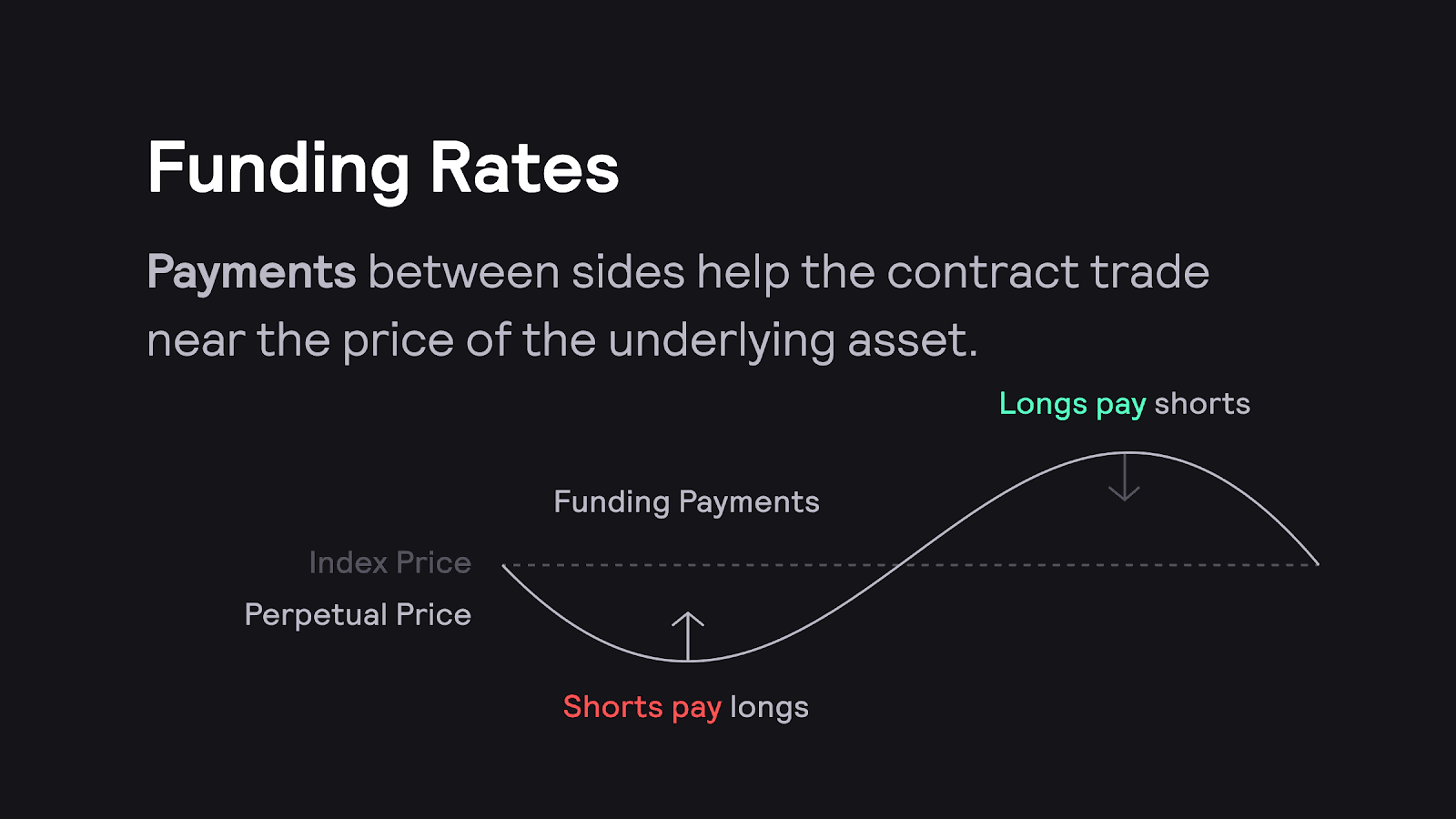
In short, funding rates are periodic payments made between buyers and sellers of derivative contracts to keep the price of the contract in line with the price of the underlying asset. These payments are typically made every 8 hours or so, and the amount of the payment is determined by the difference between the market price of the contract and the underlying asset.
If the market price of the contract is higher than the price of the underlying asset, buyers will pay sellers to hold the contract. Conversely, if the market price of the contract is lower than the price of the underlying asset, sellers will pay buyers to hold the contract.
Funding rates play a crucial role in maintaining price stability in derivative markets, and they are an important consideration for traders who are looking to hold positions over extended periods. High funding rates can make holding a position more expensive, while low funding rates can make it cheaper.
What decides the funding rate?
The funding rate in derivative markets is determined by the difference between the market price of the derivative contract and the price of the underlying asset it tracks. Specifically, the funding rate is calculated as the premium or discount of the contract price to the underlying asset price, and it is used to adjust the price of the contract to reflect the underlying asset's value.
In general, the funding rate is calculated by taking into account several factors, including:
- Market demand: The funding rate is influenced by market demand for the derivative contract. When there is high demand for a contract, the funding rate may become more expensive as buyers are willing to pay a premium to enter into the contract.
- Time to expiration: As a derivative contract approaches its expiration date, the funding rate may increase or decrease depending on whether it is in contango (when the future price is higher than the spot price) or backwardation (when the future price is lower than the spot price) relative to the underlying asset.
- Interest rates: Interest rates also play a role in determining the funding rate. If interest rates in the market are high, the funding rate may be higher to reflect the cost of capital for holding the position.
- Market sentiment: Funding rates can also be influenced by market sentiment and other macroeconomic factors, such as global events, news releases, and economic indicators, which can impact demand for the derivative contract and its underlying asset.
Ultimately, the funding rate is determined by the interplay of these factors and is calculated periodically based on the price difference between the derivative contract and its underlying asset.
What impact does the funding rate have on traders?
Funding rates can have a significant impact on traders who hold positions in derivative markets. Here are a few ways that funding rates can affect traders:
- Cost of holding positions: If a trader holds a long or short position in a derivative contract, they will typically have to pay or receive funding at the funding rate. If the funding rate is high, this can make holding the position more expensive, which can eat into profits.
- Incentives for market participants: Funding rates can incentivize market participants to take certain positions. For example, if the funding rate is negative, it may be more attractive for traders to take long positions in the derivative contract to receive the funding payment.
- Market stability: Funding rates can help to maintain price stability in derivative markets. By adjusting the price of the contract based on the underlying asset's value, funding rates can help to prevent large price discrepancies from developing between the derivative contract and its underlying asset.
- Trading strategy: Funding rates can also play a role in traders' strategies. Some traders may take advantage of low funding rates to hold long-term positions in derivative contracts, while others may look to profit from short-term fluctuations in funding rates.
Overall, funding rates are an important consideration for traders who hold positions in derivative markets. By understanding the factors that impact funding rates and how they can affect their positions, traders can make more informed decisions and manage their risk more effectively.
Correlation with market sentiment
Funding rates can be correlated with market sentiment and can serve as an indicator of overall market sentiment in derivative markets. Here are a few ways that funding rates and market sentiment can be related:
**- High demand and bullish sentiment: **When there is high demand for a derivative contract and bullish sentiment in the market, the funding rate for the contract may be higher. This is because buyers are willing to pay a premium to enter into the contract, and the funding rate adjusts accordingly to reflect this demand.
**- Low demand and bearish sentiment: **Conversely, when there is low demand for a derivative contract and bearish sentiment in the market, the funding rate may be lower. This is because sellers are willing to pay a discount to exit the contract, and the funding rate adjusts accordingly to reflect this lack of demand.
**- Macro factors: **Funding rates can also be impacted by macro factors that impact market sentiment, such as news releases, economic indicators, and global events. For example, if there is a significant announcement that impacts the underlying asset of a derivative contract, the funding rate may shift to reflect the resulting market sentiment.
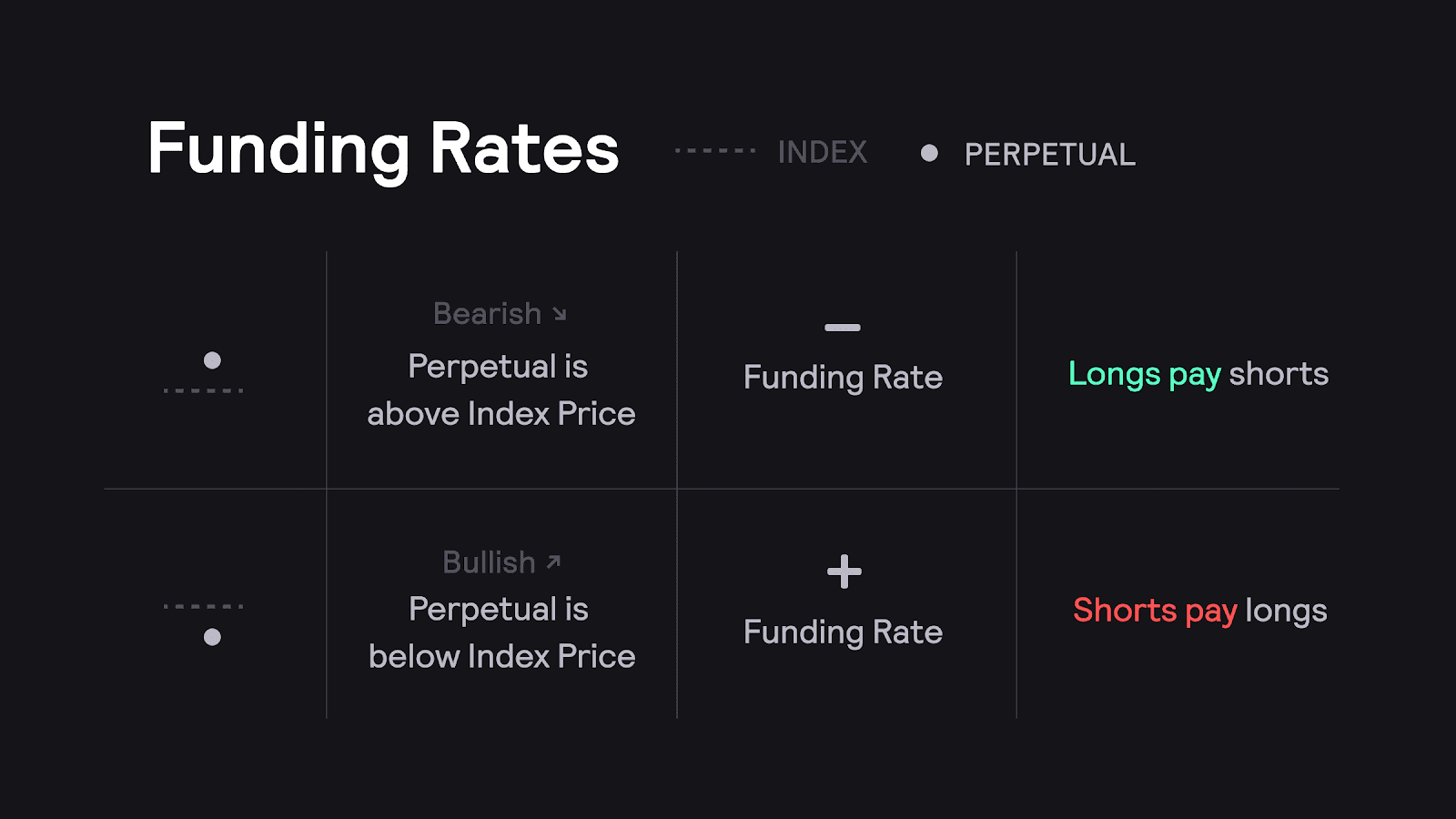
Traders can use funding rates as a tool to gauge overall market sentiment in derivative markets. By monitoring changes in funding rates and understanding the factors that impact them, traders can gain insight into how the market is reacting to current events and adjust their trading strategies accordingly.
How To Profit From It
Profiting from funding rates in derivative markets involves taking advantage of the difference between the funding rate and the expected price movement of the underlying asset. Here are a few ways that traders can potentially profit from funding rates:
- Carry trading: One way to profit from funding rates is through carry trading. This involves taking a long or short position in a derivative contract with a favorable funding rate and holding the position for an extended period. If the price of the underlying asset moves in the trader's favor, they can profit from both the price movement and the funding payments.
- Hedging: Traders can also use funding rates to hedge their positions. For example, if a trader holds a long position in a derivative contract with a negative funding rate, they could sell a similar contract with a positive funding rate to offset the cost of holding the position.
- Scalping: Traders can also use short-term fluctuations in funding rates to scalp profits. This involves taking advantage of small movements in the funding rate by quickly opening and closing positions.
- Arbitrage: In some cases, there may be discrepancies between the funding rate of a derivative contract and the expected price movement of the underlying asset. Traders can potentially profit from these discrepancies through arbitrage strategies, such as simultaneously buying the derivative contract and selling the underlying asset.
It's important to note that profiting from funding rates in derivative markets can be challenging and carries risk. Traders should thoroughly research the market, understand the factors that impact funding rates, and use appropriate risk management strategies when entering into trades.
Conclusion
Including exchange fees, this can wipe out trade winnings, thus risk/reward assessments are crucial, especially on smaller accounts.
However, the cryptocurrency market is still very inefficient at arbitrage, allowing even retail traders to profit. Any trading strategy will benefit from understanding funding and how it affects a position.
If you aspire to become a pro-crypto trader, then you have clicked at the right place. CoinScreener.ai advanced technical analysis and AI-generated signals, rich data sources from more than 1000 Future & Spot markets enriched by Machine Learning, and major cryptocurrency exchanges in the world to screen for market trading signals, monitor and analyze the trading behavior of Whales, Top Traders to identify the best market trends in real-time and make the most profit from your trade today.
Follow CoinScreener: https://linktr.ee/coinscreener.ai
#coinscreener #coin #screener #coinscreener.ai #crypto #ai #cryptosignals #cryptocoin #token #cryptoscreener #screenerapp #screenertool #tradingsignals #aitradingsignals #technicalanalysisscreener #technicalanalysis #tradingbot #cryptohopper #cryptobot #dcabot #robot #calculatorcrypto #btc #binance #liquidations #fundingrate #cryptoscreener #btcliquidation #cryptoliquidation #Liquidation #future #futuretrading #cryptocalculator #costbasic #fed #FOCM #Federalreserve #CEX #DEX #KYC #RSI #indicator #P2P #gridtrading #perpetualcontracts #perpetualfutures