
The actions of the Fed are crucially significant to many crypto enthusiasts who have invested in the crypto market.
However, there are many crypto newbies who do not understand this organization well.
So in this article, let's go with CoinScreener.ai to find out what the Fed is and how its decisions affect the crypto market.
What is the Fed?
The Federal Reserve System, commonly known as the Fed, is the central banking system of the United States. It was created in 1913 to provide the nation with a safe, flexible, and stable monetary and financial system. The Fed is responsible for carrying out a variety of functions, including setting monetary policy, supervising and regulating banks, and maintaining the stability of the financial system. The Fed operates independently within the government and its decisions do not require presidential or congressional approval.
The Fed's Mission
The mission of the Federal Reserve, as stated on its website, is "to foster the stability, safety, and soundness of the U.S. financial system; to promote sustainable growth; and to help ensure that all Americans have the opportunity to participate in the economic prosperity."
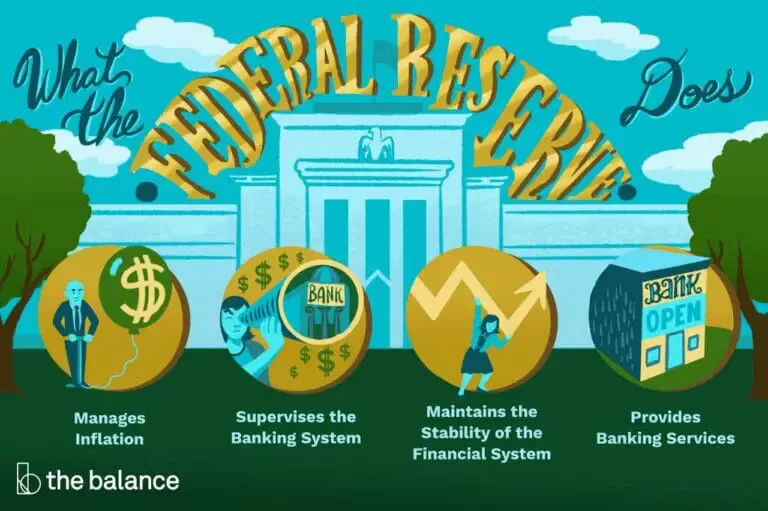
To achieve this mission, the Fed carries out several key responsibilities, including conducting monetary policy to manage inflation and stabilize the economy, supervising and regulating banks and other financial institutions to ensure their safety and stability, and maintaining the stability of the financial system as a whole. The Fed also provides financial services to the U.S. government and supports the growth of the economy through various lending and monetary operations.
Why the Fed's decision has an impact on the global economy
The Federal Reserve's decisions have a significant impact on the global economy because the U.S. economy is the largest in the world and is heavily interconnected with other economies through trade, investment, and finance. When the Fed changes its monetary policy, it can affect interest rates, the availability of credit, and the value of the U.S. dollar, which in turn can influence economic activity both domestically and abroad.
For example, if the Fed raises interest rates, it can reduce the demand for borrowing and investment, slowing economic growth. This can also lead to a stronger U.S. dollar, making exports more expensive and imports cheaper, which can affect the competitiveness of U.S. firms in the global marketplace. Similarly, if the Fed lowers interest rates, it can stimulate borrowing and investment, boosting economic growth, and potentially leading to a weaker U.S. dollar.
Because of the interconnectedness of the global economy, the Fed's monetary policy decisions can have spillover effects on other countries, including changes in exchange rates, capital flows, and inflation. For these reasons, the Fed's decisions are closely watched and analyzed by financial markets and policymakers around the world.
What is Fed's federal interest rate?
The federal funds rate, also known as the federal interest rate, is the interest rate that banks charge each other for overnight loans made from their excess reserves. The Federal Reserve sets a target for the federal funds rate and uses various tools to influence the rate towards its target. The target federal funds rate is the primary tool the Federal Reserve uses to conduct monetary policy, and changes in the target rate can have a significant impact on the U.S. and global economies.
A higher federal funds rate typically leads to higher interest rates for consumers and businesses, reducing borrowing and spending and slowing down economic growth. A lower federal funds rate, on the other hand, makes borrowing and spending cheaper, potentially boosting economic growth. The Federal Reserve adjusts the federal funds rate in response to changing economic conditions, with the goal of achieving its dual mandate of maximum employment and price stability.
It's important to note that the federal funds rate is not the same as the prime rate, which is the interest rate that banks charge their best customers for loans. The prime rate is usually set at a level slightly above the federal funds rate, and changes in the federal funds rate often lead to similar changes in the prime rate.
How the Fed's interest rate decision affects the markets
The Federal Reserve's decisions on interest rates can have a significant impact on financial markets. The interest rate set by the Fed influences the cost of borrowing for individuals, businesses, and governments, and can affect the value of stocks, bonds, and other financial assets.
The stock and bond market
When the Fed raises interest rates, it makes borrowing more expensive, which can slow down economic growth and reduce inflation. In response, bond prices may fall as their fixed interest payments become less attractive relative to higher-yielding alternatives. This can lead to a decrease in demand for bonds and push up yields, making them more attractive to investors. Higher interest rates can also boost the value of the U.S. dollar, making it more attractive to foreign investors and potentially increasing demand for U.S. exports.
On the other hand, when the Fed lowers interest rates, it makes borrowing cheaper, which can stimulate economic growth and increase inflation. Lower interest rates can boost the value of stocks and other riskier assets, as investors seek higher returns in a low-interest rate environment. Additionally, a lower U.S. dollar can make exports more expensive, reducing demand for U.S. goods in the global marketplace.
However, the impact of interest rate changes on the stock and bond markets can be complex and may not always be predictable. Market participants may react differently to interest rate changes based on their own individual circumstances, such as their investment strategies and risk tolerance. Additionally, other factors, such as changes in the broader economy, geopolitical events, and company-specific news, can also have a significant impact on stock and bond prices.
The Crypto Market
The Federal Reserve's interest rate decisions can potentially have an impact on the cryptocurrency market, but the relationship between interest rates and cryptocurrencies is complex and not well understood. Cryptocurrencies are decentralized and operate outside of the traditional financial system, so their prices are not directly tied to interest rates in the same way that stocks or bonds are.
However, interest rates can affect the overall economic environment and investor sentiment, which can in turn impact the demand for cryptocurrencies. For example, if the Fed raises interest rates, it can reduce borrowing and spending, slowing down economic growth. This can make investors more risk-averse and reduce demand for cryptocurrencies, which are often seen as speculative and high-risk investments.
On the other hand, if the Fed lowers interest rates, it can stimulate borrowing and spending, potentially boosting economic growth and increasing investor risk tolerance. This could increase demand for cryptocurrencies and boost their prices.
It's also important to note that the cryptocurrency market is still relatively small and highly speculative, and is subject to significant volatility and rapid price swings. The impact of interest rate changes on the cryptocurrency market can be difficult to predict and is likely to depend on a variety of factors, including investor sentiment, regulatory developments, and technological advancements.
Conclusion
CoinScreener has provided you with information about the Fed and how its decisions affect the crypto market.
We hope after this article you will have more knowledge to equip your crypto investment journey. Wish you luck!!!
Interested in trading crypto? With CoinScreener's advanced technical analysis and AI-generated signals, rich data sources from more than 1000 Future & Spot markets enriched by Machine Learning, and major cryptocurrency exchanges in the world to screen for market trading signals, monitor and analyze the trading behavior of Whales, Top Traders to identify the best market trends in real-time and make the most profit from your trade today.
Follow CoinScreener: https://linktr.ee/coinscreener.ai
#coinscreener #coin #screener #coinscreener.ai #crypto #ai #cryptosignals #cryptocoin #token #cryptoscreener #screenerapp #screenertool #tradingsignals #aitradingsignals #technicalanalysisscreener #technicalanalysis #tradingbot #cryptohopper #cryptobot #dcabot #robot #calculatorcrypto #btc #binance #liquidations #fundingrate #cryptoscreener #btcliquidation #cryptoliquidation #Liquidation #future #futuretrading #cryptocalculator #costbasic #fed #FOCM #Federalreserve